
Stormwater and yard drainage in Christchurch
Water that sits on the lawn, pools against the house or runs down the driveway into the garage is a drainage problem, and it has a fix. Smart Contracting installs channel drains, sumps, subsoil drains and soak pits across Christchurch and the Selwyn district, and connects them to a proper outlet. We find where the water is coming from first, and the price is confirmed with you before anything starts.
5.0 on Google • CCC authorised drainlayers
Where the water comes from decides the fix
Three different problems get described the same way, as a flooded yard. Surface water runs off a driveway, patio or path and collects at the low point, often against the house or the garage door. Ground water sits in the soil itself, so the lawn stays soft for days after rain has stopped. Roof water is meant to leave through the downpipes and a stormwater drain, and when that drain is broken or blocked it comes up beside the foundations instead.
Each one needs a different answer, and the wrong one is money in a trench. So the first visit is spent working out which of the three you have. Where there is an existing stormwater line we put a camera down it, the same way we would for any drain inspection, because a new drain connected to a failed pipe fixes nothing.
- The cause found before anything is installed
- Channel drains, sumps, subsoil drains and soak pits
- Connected to an outlet your council allows
- Lawn, concrete and pavers reinstated
Channel drains and sumps for driveways and patios
Hard surfaces shed water fast. A driveway that falls toward the garage, or a patio laid level against the house, sends every shower to the one place you do not want it. A channel drain, sometimes called a strip drain, is a long grated trough set flush with the surface. It catches water along a whole edge and carries it away before it reaches the door.
A sump does the same job at a single low point. It is a pit with a grate on top and a silt trap in the bottom, so leaves and grit settle there instead of travelling down the pipe. We set both with a proper fall to an outlet, cut the concrete or pavers cleanly, and reinstate the surface around them so the drain looks like it was always part of the job.
Subsoil drains for a lawn that stays wet
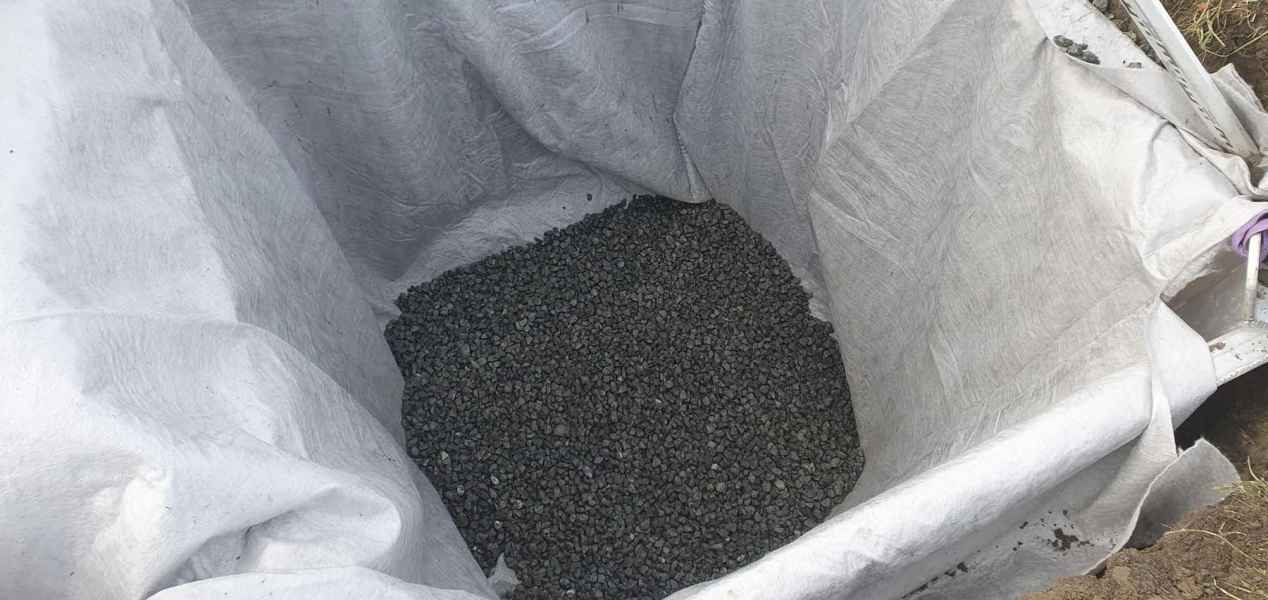
If the grass squelches a week after rain, the water is in the ground and a grate on the surface will not reach it. The fix is a subsoil drain. That is a perforated pipe laid in a trench, surrounded by drainage aggregate and wrapped in filter cloth. Water in the soil finds the trench, enters the pipe and is carried to an outlet, which lowers the water level across the lawn beside it.
The filter cloth matters more than it looks. Without it, fine silt washes into the stone and the pipe and the drain slowly chokes. The spacing and depth matter too, and they depend on your soil. We lay them along the wet line of the section, or beside a retaining wall or foundation where water is building up behind it.
Soak pits, and when they are the wrong answer
A soak pit is an underground chamber or stone-filled pit that holds stormwater and lets it drain away into the surrounding ground. Where the ground is free draining it is a tidy way to deal with roof and surface water on the property. The pit is lined with filter cloth so the soil around it does not migrate in, and it is sized for the area it has to drain.
It is not the right answer everywhere. In heavy or silty ground the water has nowhere to go, and in parts of Christchurch the water table sits close to the surface, so a pit there simply fills and stays full. We will tell you plainly if a soak pit will not work on your section, and what the alternative is, before you pay for one.
Where the water has to end up
Every stormwater drain needs a lawful place to discharge. That might be the council stormwater system, the kerb and channel, or soakage on your own land. It cannot be the neighbour's section, and it cannot be the sewer. Stormwater is kept out of the wastewater system on purpose, which is why a gully trap is set above ground level and why a downpipe is never run into one.
The rules on outlets are set by the council, and Christchurch City and Selwyn District do not handle them identically. Some stormwater work also needs a building consent. We work under both councils, so we will tell you which rules apply to your address and whether consent is needed before any work starts.
What the job looks like
We come out and look at the section, ideally with you there to show us where the water sits and how long it stays. We work out the cause, set out what we would install and where it would discharge, and confirm the price with you before anything starts. Nothing is dug on a guess.
On the day we mark out the run, check for buried services, and dig tidy. Pipes are laid to a measured fall and bedded properly. Then the ground goes back the way we found it, with lawn reinstated and concrete or pavers made good. Stormwater work for a new house or an extension is covered under residential drainage, and a broken existing line under drain repairs.
Stormwater and yard drainage questions
Why does my lawn flood after rain?
Usually for one of three reasons. Surface water is running onto it from a driveway, patio or roof. The ground itself is holding water because the soil is heavy or the water table is high. Or an existing stormwater drain is blocked or broken. The fix is different for each, so we find the cause first.
What is the difference between a channel drain and a sump?
A channel drain is a long grated trough that collects water along a line, such as across a driveway or along a patio edge. A sump is a single grated pit that collects water at one low point and traps silt in its base. Both need a fall to an outlet.
Do soak pits work in Christchurch?
In some places, yes. They work where the ground drains freely. They do not work in heavy or silty soil, or where the water table is close to the surface, because the water has nowhere to go. We check the ground before recommending one.
Do I need council consent for stormwater drainage?
Some stormwater work needs a building consent and some does not. It depends on what is being installed, where it discharges and which council you are under. We tell you what applies to your address before the job starts.
Can stormwater be connected to the sewer?
No. Stormwater has to be kept out of the wastewater system. It goes to the council stormwater system, the kerb and channel, or soakage on your own property, depending on what your council allows.
Can you fix an existing stormwater drain rather than lay a new one?
Often, yes. We put a camera down the line to see whether it is blocked, broken or has lost its fall. A blockage can be cleared and a damaged length can be repaired, which is usually less disruptive than starting again.
Do you do yard drainage in Rolleston and Selwyn?
Yes. We are based in Rolleston and work across Christchurch and the Selwyn district, including Lincoln and the suburbs in between.
Drainage by area: Rolleston / Lincoln / Halswell / Hornby / Wigram / Cashmere / Riccarton